- The Spark
- Posts
- Crowdsourcing a ban on cigarette ads
Crowdsourcing a ban on cigarette ads
An investigation proved cigarettes were being pushed alongside sweets – and prompted change in the law

Lucy Nash
December 03, 2025
Hey there,
Cigarette advertising isn’t something you see in the UK anymore. The billboards and splashy TV campaigns that sustained the likes of Saatchi and Saatchi for so many years have long since disappeared, swept away by a series of bans in the Noughties.
But while in the UK tobacco companies have pivoted to peddling vapes and slogans about a cigarette-free future, they’ve continued to aggressively advertise cigarettes near schools in countries where they can, from Madagascar to Indonesia in a fairly flagrant attempt to get the next generation hooked.
So, three years ago my colleague Paul found himself in Lima, Peru.
For anyone that’s not been, Paul tells me Lima is a bustling cosmopolitan city with a lot to offer – a 40km stretch of coastline, Spanish colonial architecture, food to die for, and traffic that will have you considering murder. But Paul wasn’t in town for any of that.
He was there to check out the cornershops (or bodegas, as they are known in Peru). These tiny convenience stores are a part of the fabric of everyday life across the country.
They were also a key location for a major loophole in the law. The promotion of tobacco products within 500 metres of a school is illegal in Peru – unless the advertising is done inside.
Paul noticed that even in the tiniest shops, he could find eye-catching illuminated screens and sleek displays promoting cigarettes. Some of these bodegas were just over the road from school gates.
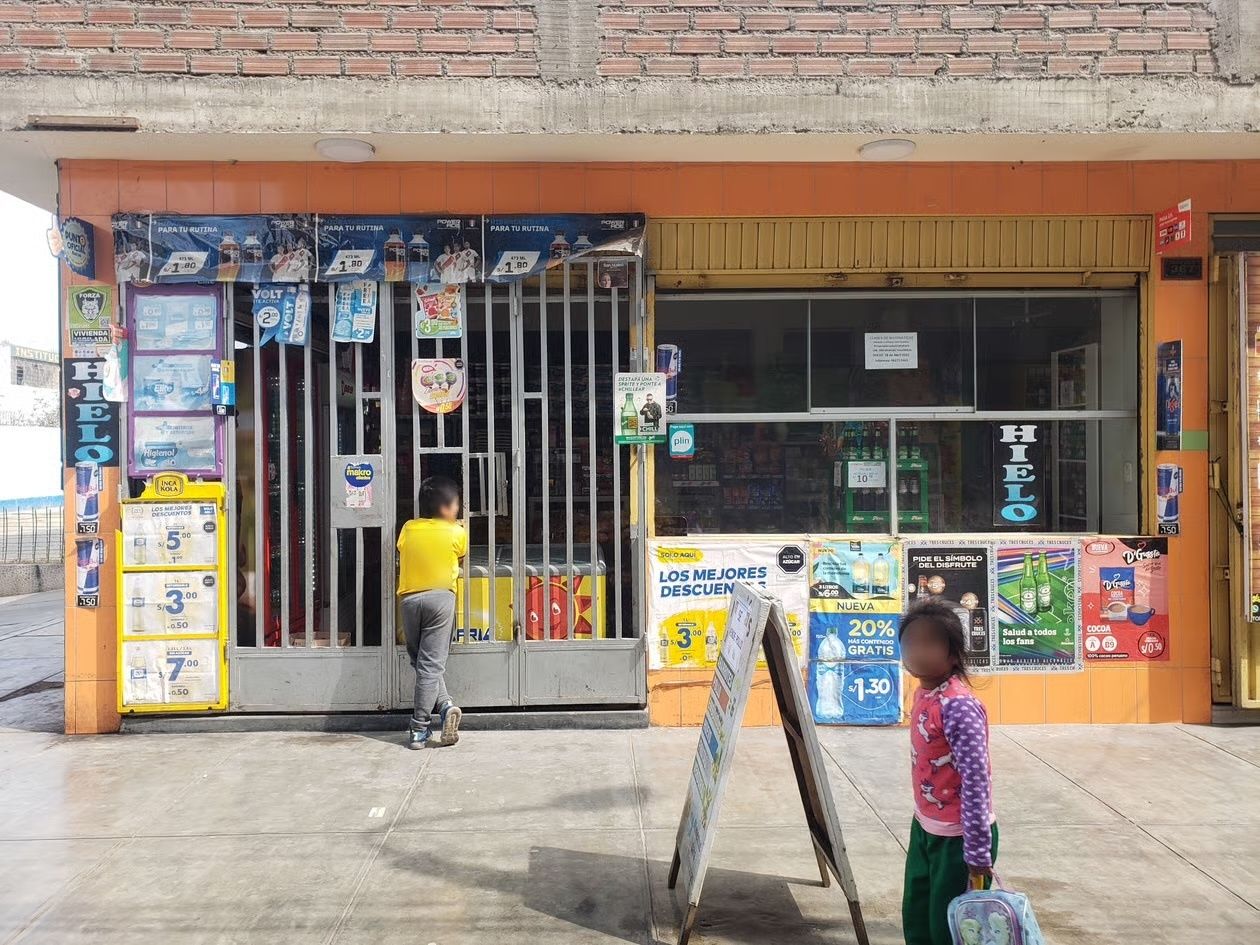
Bodegas like this one are part of everyday life in Lima
The potential impact was obvious: at the time of Paul’s visit, the average age people started smoking in Peru had been dropping for decades, and had reached just 13 years old.
The Bureau worked with the local reporting outlet Ojo Publico, NGOs, and institutions in Lima, to get a team of volunteers up and running and collecting data about adverts around their neighbourhood. Using methods and tools used by leading research institutions, the volunteers gathered photos, GPS coordinates, addresses and other information using a bespoke version of an app called KoboToolbox.
With a great swathe of crowdsourced data submitted, it was over to the reporters to check it was all in order. They checked what brands were being advertised and how close each shop was to a school. Months after Paul got back, our team of fact checkers set off scouring the streets of Lima … entirely remotely.
Using well-known OSINT – that’s open-source intelligence – validation methods, they compared the coordinates and photos of the shops shared by the volunteers with what was present on Google Streetview. Obviously, sometimes streets and shopfronts had changed since the last time the Streetview cameras had driven by. Everything from the pattern of an iron grille to the bend in a lamppost or the position of a water tank on a hillside became clues to confirm a shop’s location.
“It was one of the most unusual – but fun – fact checking processes I’ve taken part in,” said Matt Chapman, who was a lead reporter at TBIJ at the time and one of Paul’s teammates on the investigation.
Our validated crowdsourced data, cross referenced with public data about local schools, gave us an idea of the population at risk; a staggering quarter of a million children. Meanwhile, on the ground reporting revealed sales reps told shop owners where to display cigarettes, including placing them among sweets and snacks. We could see that advice being followed in the photos.
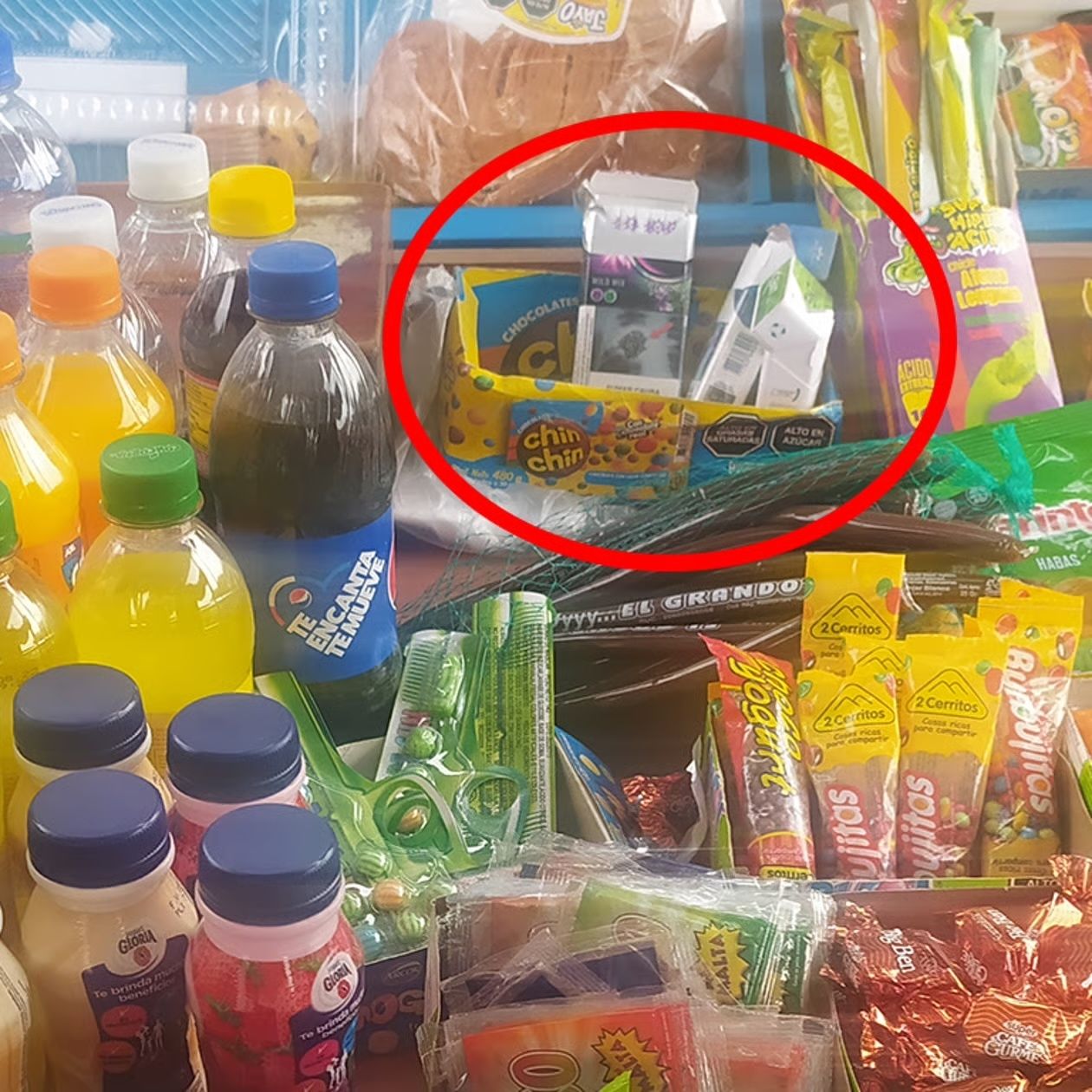
In one bodega, packets of cigarettes were displayed among confectionery and fizzy drinks
The findings were published both in the UK and Peru three years ago this month. But publishing isn’t where our work stops at TBIJ. Paul and the rest of the team drafted a formal report for those campaigning for a total ban on tobacco advertising – including Flavia Radovic (who you’ll hear more from in just a minute). A passionate tobacco control campaigner, Flavia had been campaigning for this change for more than ten years. She took TBIJ’s report straight to Congress, where a new law was being debated.
In November 2024, almost two years after the investigation was published, Flavia messaged Paul to say there’d been a breakthrough. The law would be changed!
“This will be a big benefit to public health,” said Matt. “It is no walk in the park getting such laws passed, as the tobacco industry is always fiercely resisting any measures that threaten its profits.”
I will return, and I will be millions
Flavia Radovic is a lawyer and a past president of the National Standing Committee for the Fight Against Tobacco (COLAT). She has been a tobacco control campaigner for 37 years. |  Flavia Radovic |
“The widespread permissiveness of cigarette advertising in Peru has been a determining factor in the increase in tobacco use among young people. Failing to adopt strict measures ends up encouraging consumption and, consequently, increasing morbidity rates, premature mortality and healthcare expenditures for treating smoking-related illnesses.
This was a crucial problem for tobacco control in Peru, as since 2010 many legislative initiatives had been promoted to establish a total ban on advertising, all of which were dismissed or shelved. This was due to interference from the tobacco industry and members of parliament who legislate with their backs turned to public health and the Peruvian people.
TBIJ’s investigation was extremely useful because the research demonstrated the level of cigarette advertising intrusion in Peruvian bodegas, many of them near schools; it also showed that store owners placed cigarette packs almost within children’s reach. The research exposes a reality that, despite being dangerous, is rendered harmless by its everyday nature in the eyes of the public, who see, without any questioning from the authorities, that cigarettes are displayed next to products for children, normalising an abusive practice that exposes a vulnerable population to a highly addictive drug in strategic locations at points of sale.
In our advocacy work, the findings of the TBIJ research were shared with members of Congress and their advisers, public officials, medical societies, academia and civil society. The research proved invaluable in supporting and justifying the total ban on cigarette advertising when it was necessary to counter the industry’s arguments against this measure, which they repeatedly described as ineffective and excessive.
In November 2024, Law 32159 was enacted, containing several important measures, including a total ban on the advertising, promotion, and sponsorship of tobacco products. We are relieved that the country has been able to fulfill its commitment to the FCTC [an international standard in tobacco control that Peru signed up to years ago] and we look forward to the prompt pre-publication of the regulations and then the rigorous implementation of the measure, so that children are never again exposed to cigarettes.
With the law enacted, it is now the responsibility of the Ministry of Health to publish the draft regulations on its website.
For many years, the state has abdicated its protective role by failing to adopt a safeguard such as a total ban on the advertising, promotion, and sponsorship of tobacco products, a measure we believe should be extended to all nicotine products. In this regard, I can only express my gratitude and encourage you to continue generating evidence to further improve public health standards in Peru.”
The impact of our investigation is so clear – the result was public support for change, and new legislation passed, potentially changing the lives of hundreds of thousands of children. But results like these are only possible with your help. My colleagues in the global health team have been working with reporters in Peru on a new story which will be out in the new year. Watch this space!
You could help make more changes like this happen by supporting our latest crowdfunder on the Big Give platform. And, want to know the best part? Every pound you donate will be doubled by Big Give at no extra cost to you, making your support stretch even further.
Have a lovely week,
Lucy Nash |  |